def grid(v1,v2,endpoints=[-3,3,-3,3],color='gray'):
    G = Graphics()
    for i in range(endpoints[0],endpoints[1]):
        for j in range(endpoints[2],endpoints[3]):
            G += line([i*v1+j*v2,(i+1)*v1+j*v2],color=color,aspect_ratio=1)
            G += line([i*v1 + j*v2, i*v1 + (j+1)*v2], color=color, aspect_ratio=1)
    return G
def grid_vecs(v1,v2,endpoints=[-3,3,-3,3],color='gray'):
    G = grid(v1,v2,endpoints,color)
    G += plot(v1,color='green')
    G += plot(v2,color='purple')
    return G
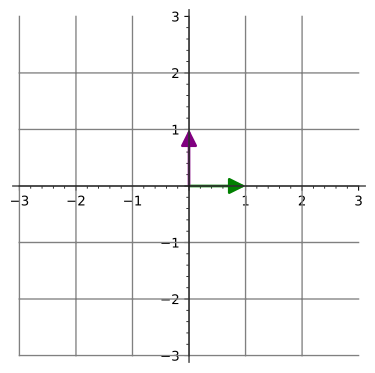
# Standard basis
V = VectorSpace(QQ, 2)
e1, e2 = V.basis()
grid_vecs(e1,e2)
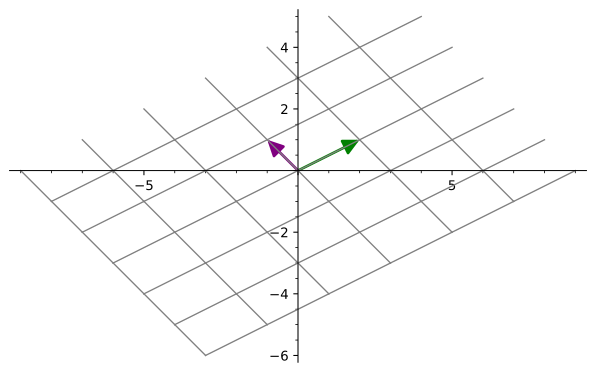
# Image of standard basis under A
A = matrix([[2,-1],[1,1]])
grid_vecs(A*e1,A*e2)
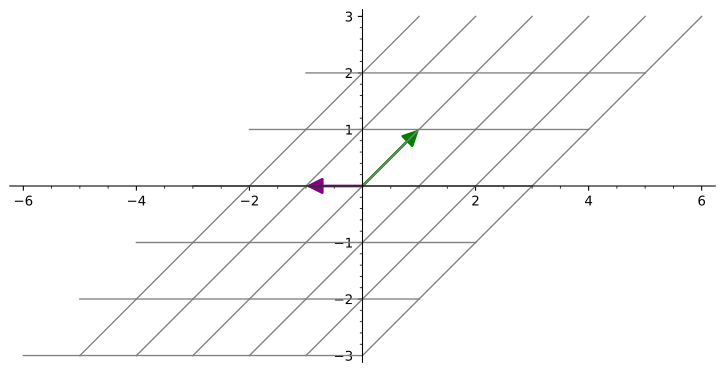
# Basis vectors for alpha
v1 = vector([1,1])
v2 = vector([-1,0])
grid_vecs(v1,v2)
# Matrix with respect to alpha
P = matrix([v1,v2]).transpose();
B = P.inverse()*A*P; B
[ 2 -1]
[ 1 1]
# Action of A on alpha
A*v1
A*v2
(1, 2)
(-2, -1)
# Check that this is consistent with B
2*v1+v2
-v1+v2
(1, 2)
(-2, -1)
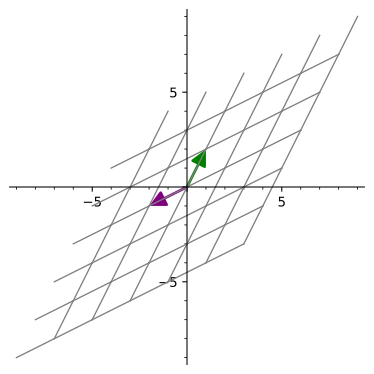
# You might need to squint, but you can imagine the above grid being transformed so that
# new_green = 2*old_green+1*old_purple, new_purple = -old_green+old_purple to get the following picture
grid_vecs(A*v1,A*v2)